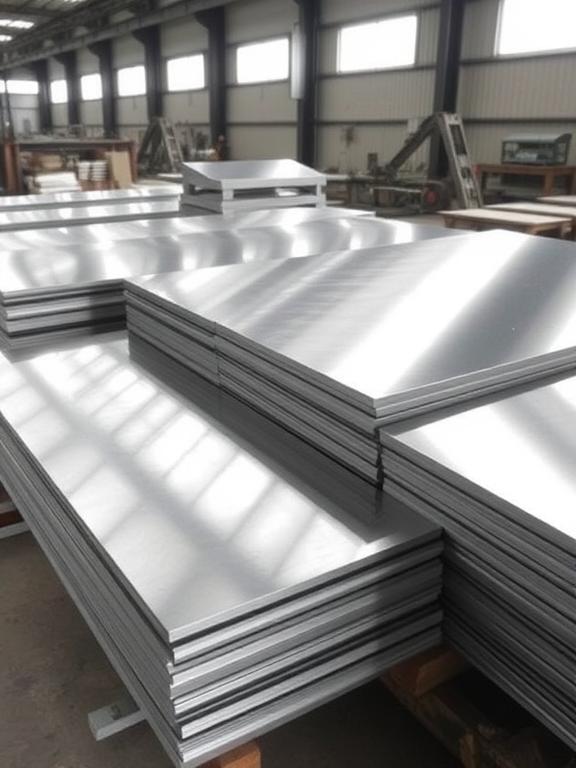
Monel 400 Plate is a flat product made from a nickel-copper alloy identified by UNS N04400. It is used in selected industrial applications where corrosion resistance and mechanical performance are important.

Monel 400 Plates are used in industrial applications where corrosion resistance, mechanical strength, and reliable performance are important. This nickel-copper alloy is commonly considered for marine equipment, chemical processing systems, oil and gas facilities, heat exchangers, and other industrial components exposed to demanding operating conditions.
Selecting the right alloy is an important decision for engineers, procurement managers, and plant maintenance teams. The material must suit the operating environment, meet the required specifications, and support the expected service life of the equipment.
Hindco Steel and Alloys supplies industrial metal products for engineering, fabrication, and project requirements. This guide explains the properties, applications, specifications, and buying considerations associated with Monel 400 Plates.
Monel 400 is a nickel-copper alloy identified by UNS N04400. It is valued for its corrosion resistance in many marine and chemical environments, along with its toughness and useful mechanical properties.
Monel 400 Plates are flat metal products used in manufacturing and fabricating industrial equipment and components. Depending on the required design, the material can be cut, formed, welded, or machined using suitable procedures.
The alloy is commonly specified under ASTM B127, which covers nickel-copper alloy plate, sheet, and strip. Buyers should confirm the applicable specification and product requirements before placing an order.
Monel 400 may be suitable for applications involving seawater, certain reducing acids, and selected chemical solutions. However, its performance depends on the chemical concentration, operating temperature, flow conditions, and other service factors. Material compatibility should always be assessed before final selection.
Monel 400 contains nickel and copper as its principal elements. The composition contributes to the alloy's corrosion resistance and mechanical performance.
| Element | Typical Specification Limit |
|---|---|
| Nickel plus Cobalt | 63.0% minimum |
| Copper | 28.0–34.0% |
| Iron | 2.5% maximum |
| Manganese | 2.0% maximum |
| Carbon | 0.30% maximum |
| Silicon | 0.50% maximum |
| Sulfur | 0.024% maximum |
These are general reference limits. The applicable material standard and material test certificate should be used to verify the composition of the supplied plates.
For industrial projects, buyers should confirm the grade, heat number, and required certification. This is particularly important for pressure equipment, chemical processing facilities, and projects with formal inspection requirements.
A clear specification helps industrial buyers obtain material that matches their application.
| Parameter | Details |
|---|---|
| Product | Monel 400 Plate |
| Material Grade | Monel 400 / Alloy 400 |
| UNS Designation | N04400 |
| Common Product Standard | ASTM B127 |
| Material Family | Nickel-Copper Alloy |
| Thickness | As required and subject to availability |
| Width and Length | As per purchase specification |
| Surface Condition | As agreed in the order |
| Inspection Documents | As required by the buyer |
| Packing | Suitable for storage and transportation |
ASTM B127 is a commonly used specification for Monel 400 plate, sheet, and strip. Additional requirements for dimensions, tolerances, testing, inspection, and traceability should be stated in the purchase order where applicable.
Buyers should also verify that the requested standard covers the exact product form and any requirements imposed by the project or construction code.
Monel 400 is used across several industries where corrosion resistance and mechanical performance are important.
Chemical plants handle fluids that can damage conventional metals. Monel 400 may be considered for selected equipment and fabricated components exposed to compatible chemical environments.
The final material choice should be based on the exact fluid composition, concentration, temperature, pressure, and exposure conditions.
Marine equipment is exposed to seawater, salt deposits, and humid conditions. Monel 400 plates may be used in selected marine components and fabricated assemblies where the alloy's properties suit the service environment.
Designers should assess flow conditions, crevice formation, and deposits before finalising the material.
Oil and gas facilities may handle produced fluids, seawater, and corrosive process chemicals. Monel 400 can be considered for selected components when it meets the required project specifications.
For sour-service or other demanding environments, the material must be checked against the relevant service requirements rather than selected based on the alloy name alone.
Heat exchangers operate under thermal and chemical conditions that can affect material life. Monel 400 may be suitable for selected heat-transfer and process applications, depending on the fluids, operating temperature, pressure, and equipment design.
Monel 400 can be used in suitable industrial components where corrosion resistance and mechanical properties are required. The material may be cut or machined into parts for specific equipment assemblies.
Wear, friction, loading, and compatibility with mating materials should also be considered for moving components.
Monel 400 and stainless steel have different material characteristics. The right option depends on the service environment and engineering requirements.
| Comparison | Monel 400 | Stainless Steel |
|---|---|---|
| Material Type | Nickel-copper alloy | Iron-based alloy containing chromium |
| Main Consideration | Performance in suitable marine and reducing chemical environments | Broad range of corrosion resistance and mechanical properties |
| Seawater Performance | Good in many suitable conditions | Depends on the grade and service conditions |
| Material Cost | Generally higher | Often lower, depending on grade |
| Selection Basis | Chemical compatibility and operating conditions | Grade-specific performance and operating conditions |
A stainless steel grade may be suitable for one application, while Monel 400 may be preferred for another. Buyers should compare material compatibility, fabrication requirements, availability, and expected service life before making a decision.
Monel 400 and Monel K-500 are related nickel-copper alloys, but their mechanical properties differ.
Monel 400 is a solid-solution alloy. Monel K-500 contains additional alloying elements and can be precipitation hardened to achieve higher strength.
| Factor | Monel 400 | Monel K-500 |
|---|---|---|
| Material Type | Nickel-copper alloy | Precipitation-hardenable nickel-copper alloy |
| Strength | Depends on material condition | Higher after suitable heat treatment |
| Selection Priority | Corrosion resistance and toughness | Applications requiring higher strength |
| Interchangeability | Must be checked against design requirements | Must be checked against design requirements |
The choice should be based on the component's mechanical requirements, operating environment, and applicable specification.
Before requesting a quotation, buyers should prepare a clear technical requirement.
These details help the supplier assess the requirement and reduce delays caused by incomplete specifications.
Industrial buyers need clear product specifications, suitable documentation, and reliable order coordination when sourcing alloy plates.
Hindco Steel and Alloys serves buyers involved in engineering, fabrication, industrial maintenance, and project procurement. When enquiring about Monel 400 Plates, provide the material grade, applicable standard, dimensions, quantity, and intended application.
Visit the Monel 400 Plates product page to submit an enquiry and discuss your supply requirements.
Availability, lead time, and certification should be confirmed for the specific order.
 India
 United States
 Saudi Arabia
 Kuwait
 Singapore
 Malaysia
 UAE
 Germany
 Italy
 China
 UK
 Canada
 Iran
 Thailand
 South Korea
 Turkey
 Morocco
 Costa Rica
 Kazakhstan
 Philippines
 Egypt
 Japan
 Russia
 Vietnam
 Australia
 Qatar
 South Africa
 Portugal
 Oman
 Jordan
 Spain
 Hong Kong
 Netherlands
 Indonesia
 Mexico
 Brazil
 France
 Taiwan
 Nigeria
 Bangladesh
 Iraq
 Ukraine
 Poland
 Romania
 Cyprus
 Angola
 Colombia
 Norway
 Chile
 Tobago
 Greece
 Czechia
 Belgium
 Sri Lanka
 Myanmar
 Venezuela